Introduction of U-KOMI enables automatic tabulation of reviews and direct reflection of customer feedback!
EC platform: Shopify
Platform at verification (may differ from the interview) · 2026-09-21

Case Study Interview
ARTISTIC&CO.GLOBAL, Inc., which has been expanding its business by leveraging its unique design—unlike typical beauty devices—and the high level of trust associated with “Made in Japan,” was facing challenges in managing its e-commerce operations. Upon learning about review management tools, the company decided to implement U-KOMI.
In this interview, we spoke with 本田様 of ARTISTIC&CO.GLOBAL Co., Ltd., who was in charge of evaluating and implementing the review tool, about the background behind the U-KOMI implementation, the deciding factors, and the results achieved.
Gaining Trust with Made-in-Japan Beauty Devices That Combine Design and Safety
Please tell us about your business.
Our main business is the sale of home-use beauty devices and cosmetics. The manufacturer, ARTISTIC&CO., Inc., originally sold beauty devices for B2B clients such as beauty salons, and later expanded into home-use beauty devices. Our company (ARTISTIC&CO.; GLOBAL) specializes in the sale of these home-use beauty devices and operates not only domestically but also internationally (in the U.S., China, Vietnam, South Korea, etc.).
What are your company’s strengths?
Our first major strength is the safety that comes from being Made in Japan. While many competitors offer products made in China, we are committed to Japanese manufacturing. We handle all aspects—planning, design, and manufacturing—at our headquarters and factory in Gifu Prefecture, and every finished product undergoes a functional check by our staff before shipment. As such, we are confident in the safety of our Made in Japan products.
Our second strength is the exceptional user experience and ease of use. Our devices are simple to operate, and the results users experience daily have earned praise not only from general consumers but also from salon owners.
Third is design. From the development stage, we meticulously refine designs that express the unique character of each device, creating beautiful forms that don’t even look like facial beauty devices.
Is sales limited to e-commerce?
We also sell through physical stores such as beauty salons, our own retail stores, and department stores. Additionally, we are expanding into electronics retail stores to cater to international customers.
We lack experience in e-commerce operations and face challenges with design and conversion rates
Please tell us about the challenges you faced before implementing U-KOMI
We began preparing for our B2C e-commerce platform around the time the COVID-19 outbreak began in Japan, or perhaps slightly earlier. We had never operated a B2C e-commerce site before, and we felt that the review systems on existing e-commerce platforms presented challenges regarding design and conversion rates.
Had you been considering implementing a review tool from the start?
We weren’t initially aware that such tools existed, but the company managing our site informed us about these services, which is when we began exploring them. During that process, we learned about U-KOMI and decided to implement it because we felt it matched our needs.
With other services available, what was the deciding factor in choosing U-KOMI?
Price was certainly a factor, but we placed a strong emphasis on UI/UX—specifically, whether the admin interface supported Japanese and was user-friendly. We were looking for an admin site that was easy for anyone to use and navigate. When comparing other services, we felt that a complex admin interface would limit the number of people capable of using it. For example, with an English interface, there’s inevitably a language barrier.
Additionally, U-KOMI’s comprehensive support system and overall responsiveness were major factors in our decision. We also appreciate the in-depth support they provide even after signing the contract, such as offering suggestions for improvements when we’re short-staffed.
Automatically aggregate customer reviews to help us improve our services more directly
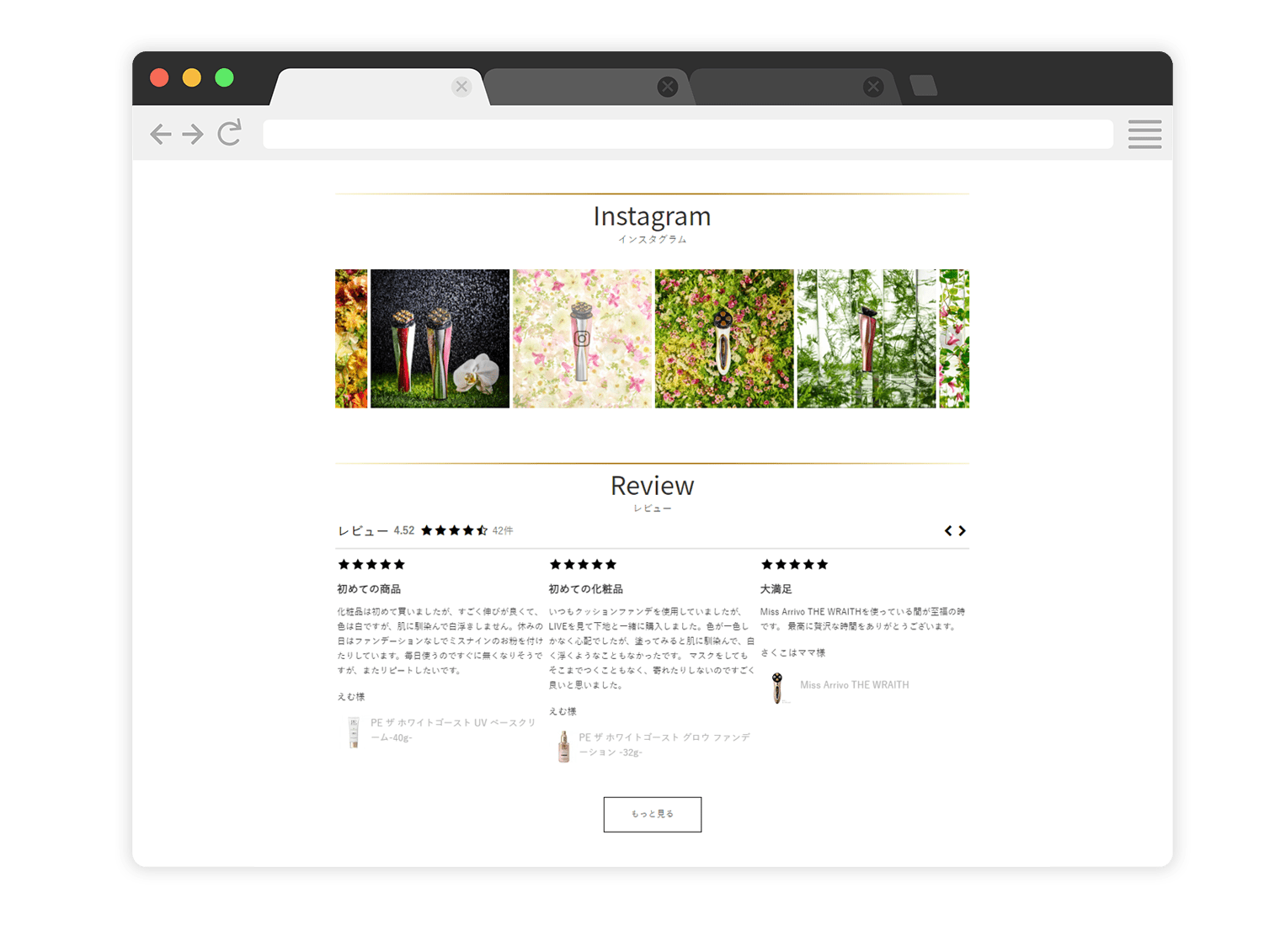
Could you also tell us about the results since implementation?
We haven’t yet had time to thoroughly analyze the numerical results, but since it automatically collects reviews without requiring us to allocate resources to do so, it’s been a huge help. The large volume of reviews collected allows us to incorporate a wide range of customer feedback, which is a major benefit of the system.
While collecting these reviews, were there any unexpected comments or topics you wanted to share?
Currently, our company offers a subscription service, and we’re constantly brainstorming improvement ideas. Thanks to the automated review collection, we’re now able to make improvements and adjustments on an ongoing basis.
For example, regarding our facial device subscription, we hypothesized that offering the first month free—instead of the standard 20,000 yen monthly fee—would lower the barrier to purchase and increase sign-ups. When we actually analyzed customer feedback, we found many comments saying, “The first month free is appreciated.” The ability to improve our service while receiving such direct feedback is a major advantage.
In other words, we’ve been able to accurately and easily execute the PDCA cycle of hypothesis and verification. Finally, could you tell us about your future plans?
We’d like to make broader use of customer feedback, such as incorporating reviews into our landing pages. We also hope you’ll continue to respond flexibly and proactively, such as by adjusting to allow reviews to be placed in areas where they currently cannot be displayed.