Custom questions to set your patronage history and realization level. Decrease abandonment rate, improve CV rate, and increase reviews!
Case Study Interview
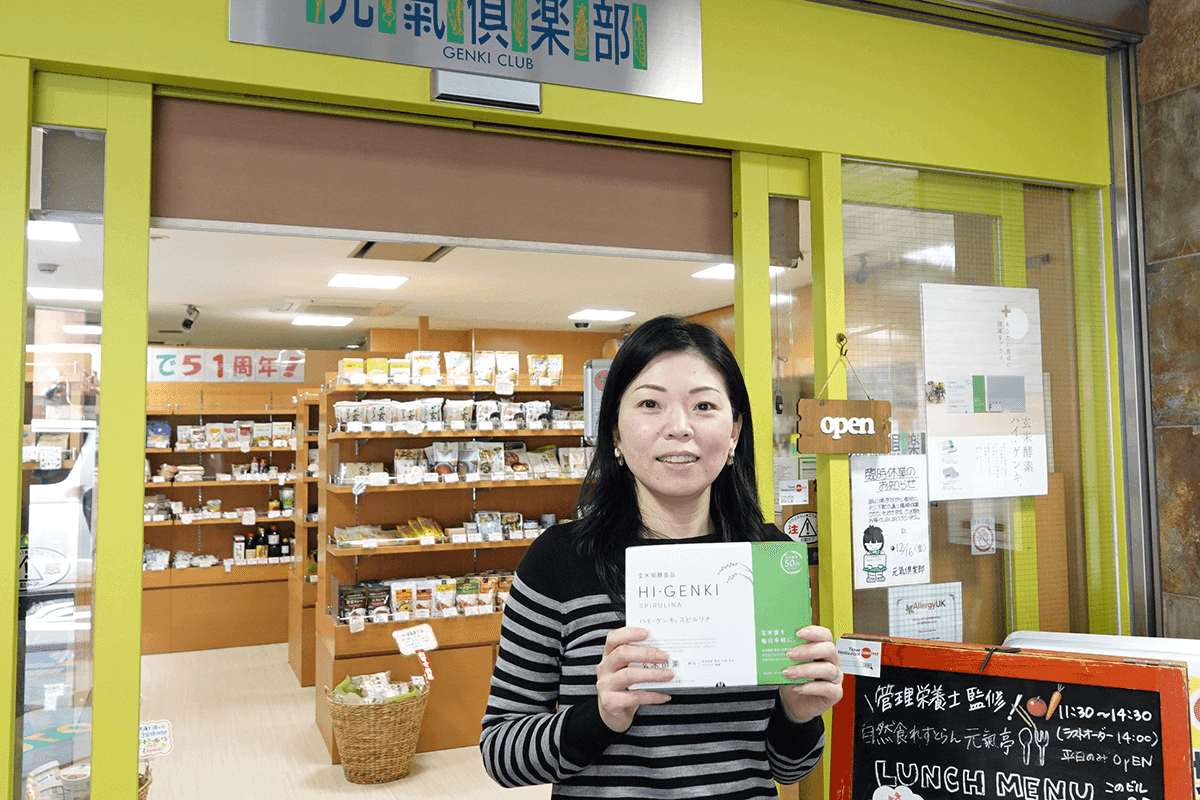
Genmai Enzyme Co., Ltd. is dedicated to delivering true health to people through the sale of healthy, natural foods—such as brown rice—and food education initiatives. Since the company was struggling to gather reviews on its own e-commerce site, it implemented U-KOMI and achieved significant results, including an increase in the number of reviews and an improvement in conversion rates. In this interview, we spoke with 日置様, who oversees U-KOMI operations at the company, about what prompted the decision to adopt U-KOMI, the key factors behind the choice, the results achieved, and future prospects.
Delivering True Health Through "Manufacturing and Sales of Healthy Natural Foods" and "Food Education"
First, could you tell us about your business operations?
Our business is built on two pillars: “manufacturing and sales of healthy natural foods” and “food education.”
In the natural health food sector, our main product is “Genmai Enzyme Hi-Genki,” a convenient brown rice food made by fermenting “brown rice”—the foundation of the Japanese diet—with “koji mold.” While it is generally known that brown rice is good for health, not many people actually continue to eat it regularly. The biggest feature of our product is that even those people can consume more nutrients than brown rice would provide while still eating white rice.
We produce our products at our own factory in Hokkaido and primarily deliver them to customers through retailers nationwide. However, to reach a wider audience, we launched our e-commerce and mail-order services in 2006. In addition, we sell products that support a healthy lifestyle, including vitamin C, mixed grains, seasonings, kelp, and cosmetics free of petroleum-derived ingredients.
In terms of food education, we host seminars and cooking classes, and dispatch food education instructors to educational institutions (from kindergartens to universities) and medical facilities to give lectures. For example, our registered dietitians serve as instructors at the “Beauty Camp” held for Miss Japan finalists.
We also operate natural food restaurants, shops, cafes, and JAS-certified organic farms. Through our products and initiatives, we aim to deliver true health to as many people as possible. Furthermore, by achieving our goal of “600,000 food enthusiasts,” we strive to contribute to reducing medical costs and realizing a healthy society, with the ultimate goal of becoming a company that remains essential to society for generations to come.
We implemented U-KOMI to address the issue of reviews not being automatically linked and the lack of updates
When did you start your e-commerce business? Could you also tell us the background behind launching it?
We launched our e-commerce business in 2006. Initially, we only sold through retail stores, but word of mouth spread, and more people began finding us through online searches. However, the lack of an e-commerce site meant we were losing potential customers, and our products were being resold on C2C sites. We felt a sense of urgency because people who didn’t understand our products were reselling them on those sites, which is why we decided to launch our e-commerce platform.
What challenges did you face before implementing the review tool?
Many customers search for products using terms like “product name + reviews,” but in those cases, our own e-commerce site didn’t appear in the results. That’s why we decided to incorporate reviews and customer feedback directly onto our site
. Initially, we collected reviews via postcards included with product shipments, but we didn’t receive as many as we’d hoped. Although we had a page compiling reviews, they weren’t automatically linked to individual product pages, so we had to manually input and display them. Because of this, the same reviews remained displayed indefinitely.
Additionally, even when we conducted product testing campaigns to gather Instagram posts as part of our UGC strategy, the process of posting them on our site required us to “prepare the images and comments and have our web development agency update the site manually each time.” This resulted in a situation where updates were infrequent, which was another challenge we faced.
What prompted you to consider implementing a review tool?
While detailed product descriptions provided by the company are certainly important for influencing purchasing decisions, I knew from personal experience that user feedback and reviews are ultimately the most effective.
We had been consulting with our web development company about a system to collect reviews, but they advised us, “Wouldn’t it be more cost-effective to try using a dedicated service?” That’s when we began looking into review marketing tools.
What ultimately led you to choose U-KOMI?
Initially, an e-commerce consultant recommended U-KOMI to us. After reviewing the service, we were interested because it included the features we wanted and offered an affordable pricing plan. Additionally, the availability of a trial period helped lower the barrier to adoption. We had also received proposals regarding user reviews from a company
we were already working with through a different service, but after considering cost and other factors, we decided to implement U-KOMI.
We set up custom questions and put them into operation. This has led to a decrease in bounce rates, an increase in conversion rates, and a rise in the number of reviews.
What initiatives are you undertaking through U-KOMI? What results have you seen?
We’ve been operating the system using custom questions that ask about length of use, perceived effectiveness, and likelihood of recommendation. Overall, we’ve received high ratings for perceived effectiveness and recommendation rates. We’ve even received reviews from customers who have been using our products for over 20 years. Seeing so many positive comments and requests from customers like this has boosted employee morale and led to improvements on our website.
Comparing the period before U-KOMI implementation (January–May average) with the period after implementation (July–November average), we observed the following improvements:
・The bounce rate on the sample request page decreased
by 4.23%. ・After adding reviews and an Instagram gallery to the landing page for social media ads, the conversion rate increased from an average of 1.37% in January–May to 2.62% in July–November.
Additionally, while we struggled to collect reviews via postcards—often receiving multiple submissions from the same person—we are now able to collect 15 times as many reviews as we did with postcards.
Finally, could you share your future outlook and any requests?
Currently, our process ends with collecting reviews and embedding them on our website, so we’d like to try utilizing them in social media ads and other channels to drive new customer acquisition.
Regarding features, it would be helpful if we could configure the system so that subscription customers don’t receive review request emails every time. Also, a bulk download feature for reviews would make it easier to share them internally, which would be a great help.