Analyze CVR increase/decrease based on number of reviews and ratings. Work to improve products by leveraging negative reviews.

Case Study Interview
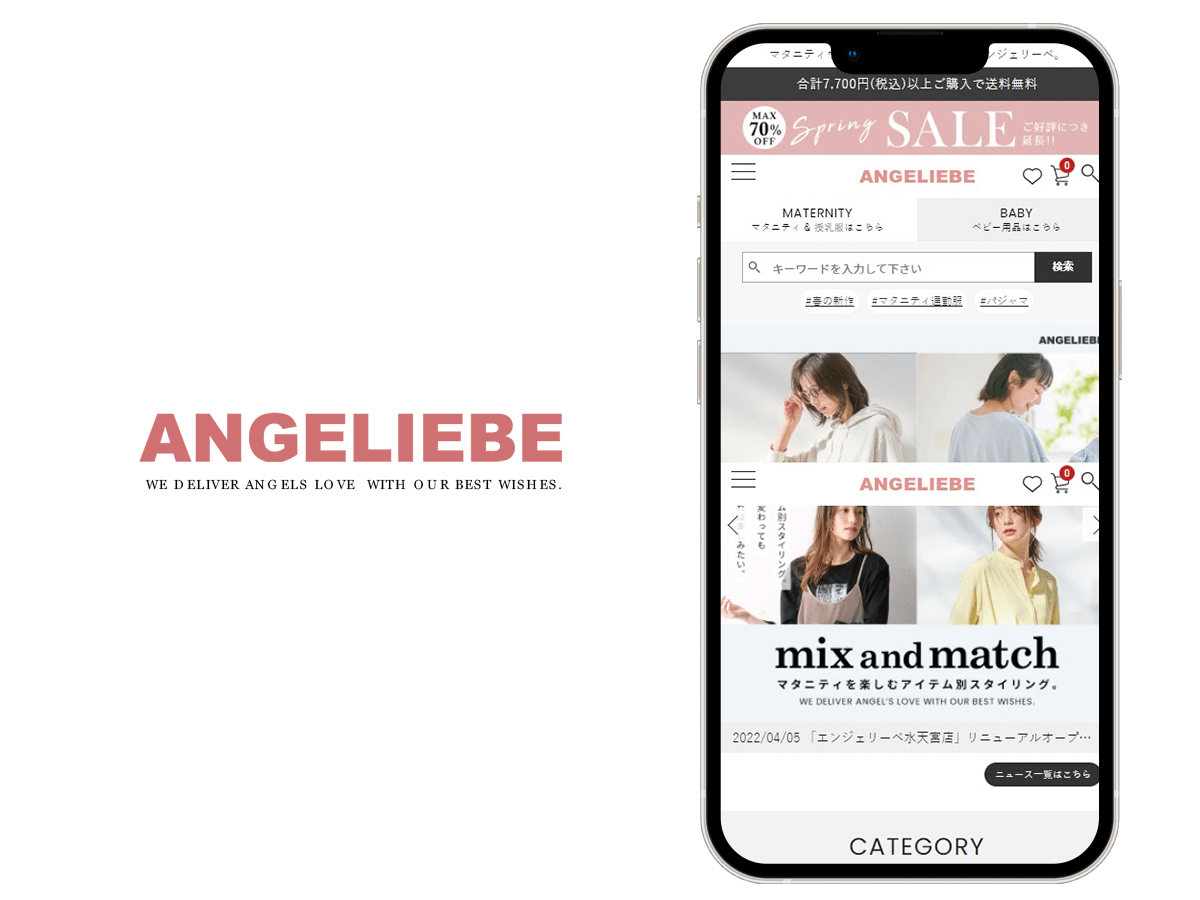
"ANGELIEBE" is a brand offering sophisticated maternity wear and accessories for women during pregnancy and the postpartum period. By implementing U-KOMI on its in-house e-commerce site, the brand not only achieved an increase in conversion rates but also conducts various analyses based on the number and ratings of reviews. In this article, we spoke with 川島様 of the Angeliebe Business Division at Marco Co., Ltd., the company behind ANGELIEBE, to learn about the reasons for adopting U-KOMI, the results achieved, and future prospects.
Operating a clothing brand for women during pregnancy and the postpartum period
First, could you tell us about your business?
Our company operates the brand “ANGELIEBE,” which primarily offers apparel and accessories for pregnant women and new mothers. I joined Marco Co., Ltd. this past March, but even before that, “ANGELIEBE” had been a long-established brand operating under that name for 34 years.
Our concept is to support customers during their maternity period, and we have several patented products. A representative example is a pair of pants called “P-Pants.” Pregnant women who are working often struggle with the stress of finding clothes that fit comfortably.First-time expectant mothers, in particular, tend to feel anxious about their growing bellies and periods when they don’t feel well. P-Pants can be worn comfortably even as body shapes change, and we receive many comments from customers who previously wore clothes from major apparel brands saying, “I wish I had known about these sooner.”
What kind of customers make up your target demographic?
My impression is that many of our customers have a relatively high level of fashion awareness and sensitivity. Pregnancy only happens a few times in a person’s life, and I feel that ANGELIEBE is chosen by those who want to wear sophisticated clothing even during that limited time.
We decided to implement U-KOMI due to its excellent cost-performance and comprehensive support
Could you tell us what prompted you to introduce a review tool?
We originally launched our e-commerce site 8–9 years ago; before that, catalog sales were our main channel. At the time, we didn’t have a review feature, but when we upgraded our shopping cart system, we began utilizing the review function that came with it.
Given the nature of maternity items—which are worn directly on the body—customers place a high priority on the user experience. Additionally, since we only have two physical stores in Tokyo and e-commerce is our main channel, customers cannot physically touch and inspect the products, making evaluations and feedback from actual users even more crucial. For these reasons, we felt reviews were necessary to convey the user experience to customers, and we also recognized the need to incorporate that feedback into product development.
What challenges did you face before implementing U-KOMI?
Before implementing U-KOMI, there was a period when we used a separate review tool integrated with our shopping cart system. However, that tool was expensive, and although we tried to verify its effectiveness—such as measuring the increase in conversion rates—we felt we weren’t getting sufficient return on investment.
There were also usability issues. Since it was a foreign-made tool, the admin interface was in English, making it difficult to navigate. Furthermore, the system was slow to load, and the time it took to perform operations was a source of frustration. For these reasons, we began considering a switch to a new tool.
What was the deciding factor in choosing U-KOMI?
One of the deciding factors was that I felt it would resolve the high costs that had been an issue up until then. We compared it with other tools, but I felt U-KOMI offered the best value for money. As for the other issue—the speed of the interface—there were absolutely no problems.
We were also impressed by the strong support they promised after implementation. With other tools, we felt it was unclear how much support would be available for post-implementation issues. In fact, we had to migrate review and product data from our previous tool to U-KOMI, and it was a huge help that they handled almost the entire process for us.
U-KOMI Implementation Boosts CVR and Enables Product Improvements Based on Reviews
Please tell us about the results you’ve seen since implementing U-KOMI.
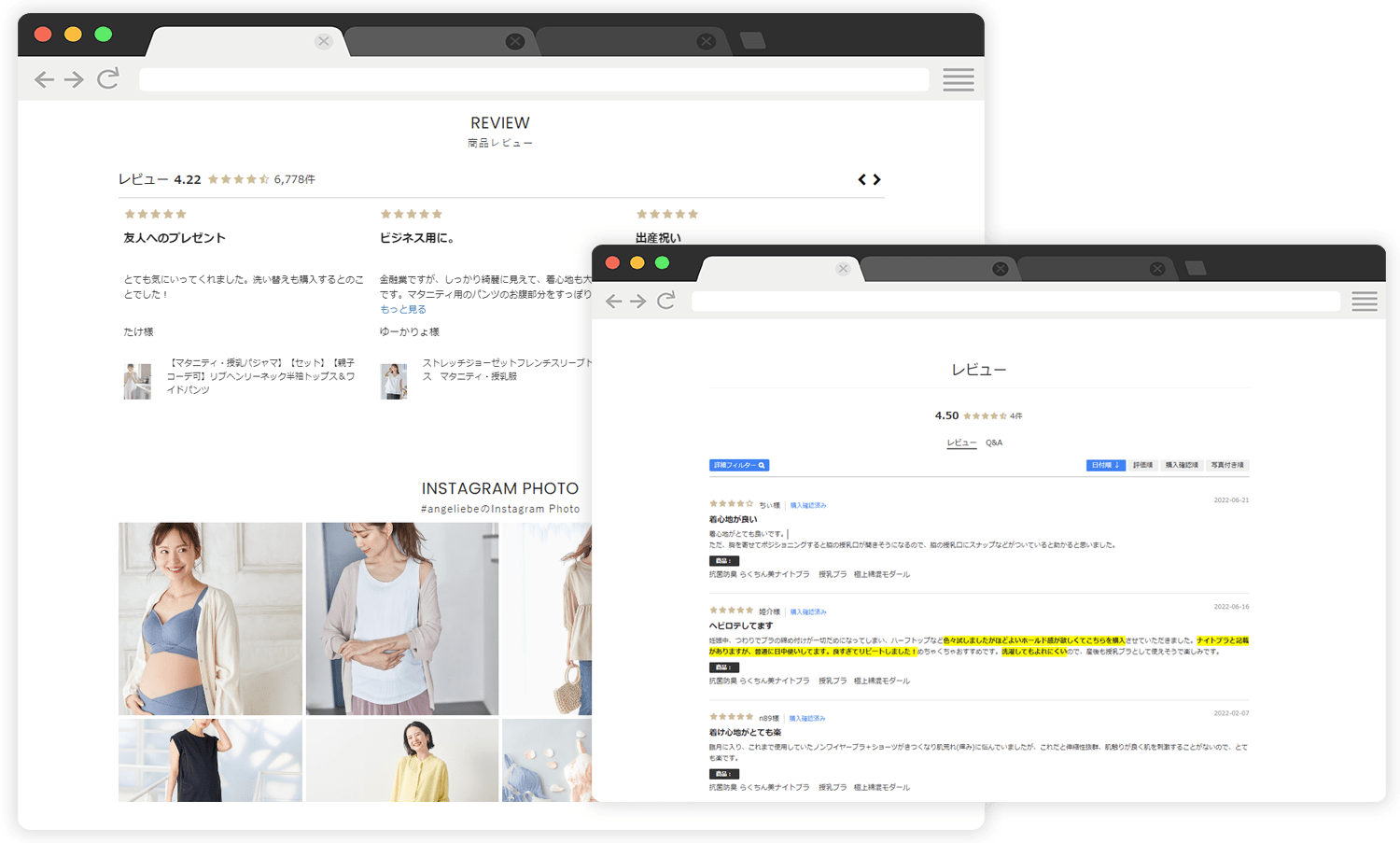
The biggest impact has been an improvement in our conversion rate (CVR). Upon detailed analysis, we found that items with a higher number of reviews and higher review scores tend to have a higher CVR. In particular, if the initial review score is high, the product is more likely to receive positive ratings overall. On the other hand, we also found that products which had previously received high ratings but suddenly received a low-rated review saw their CVR drop sharply. Being able to analyze and see these trends firsthand was very valuable.
We also share information from negative reviews with our suppliers (manufacturers) and are implementing initiatives to improve product quality.
We also utilize the Instagram integration feature, but rather than collecting customer posts, we primarily upload photos from our official account to support our branding efforts.
Finally, could you tell us about your future outlook and expectations?
Moving forward, we plan to provide more proactive feedback on negative review content and use it to reduce return rates through product improvements. As for what we’re hoping for, it would be great to have a feature that prioritizes recipients based on the scores and engagement levels of the reviews posted. For example, if we could prioritize contacting users who leave high-scoring reviews, I believe it would make it easier to collect positive reviews more efficiently.